Regular cleaning and inspection help an embroidery machine stay consistent. The exact lubrication points and intervals vary by model, so the manufacturer’s manual remains the controlling reference.
Begin with a clean working area
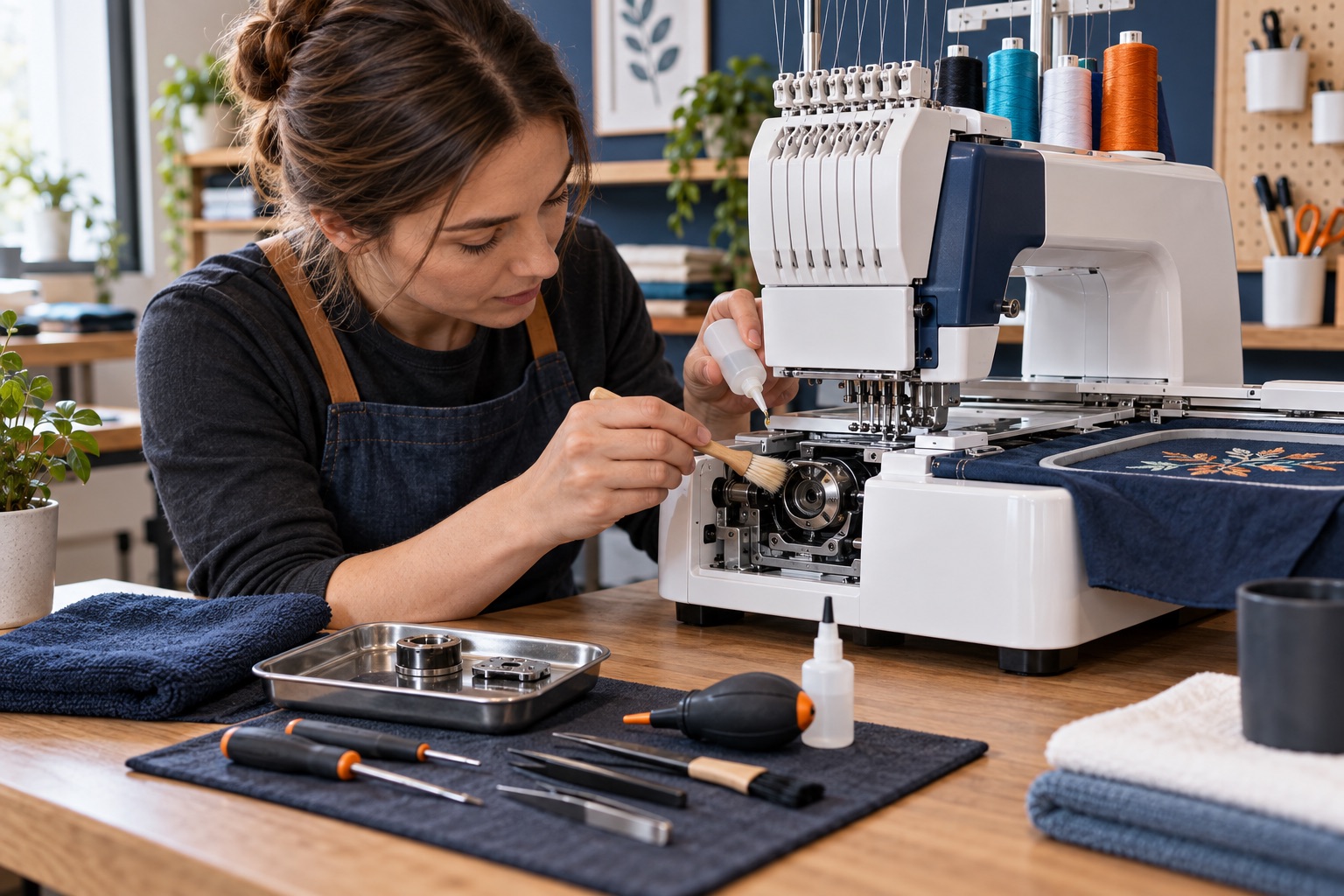
Remove thread pieces, backing scraps and dust from the table, frame area and accessible surfaces. Keep tools and loose material away from moving parts.
Use the cleaning methods approved for the machine and avoid pushing debris deeper into mechanisms.
Inspect the stitch path
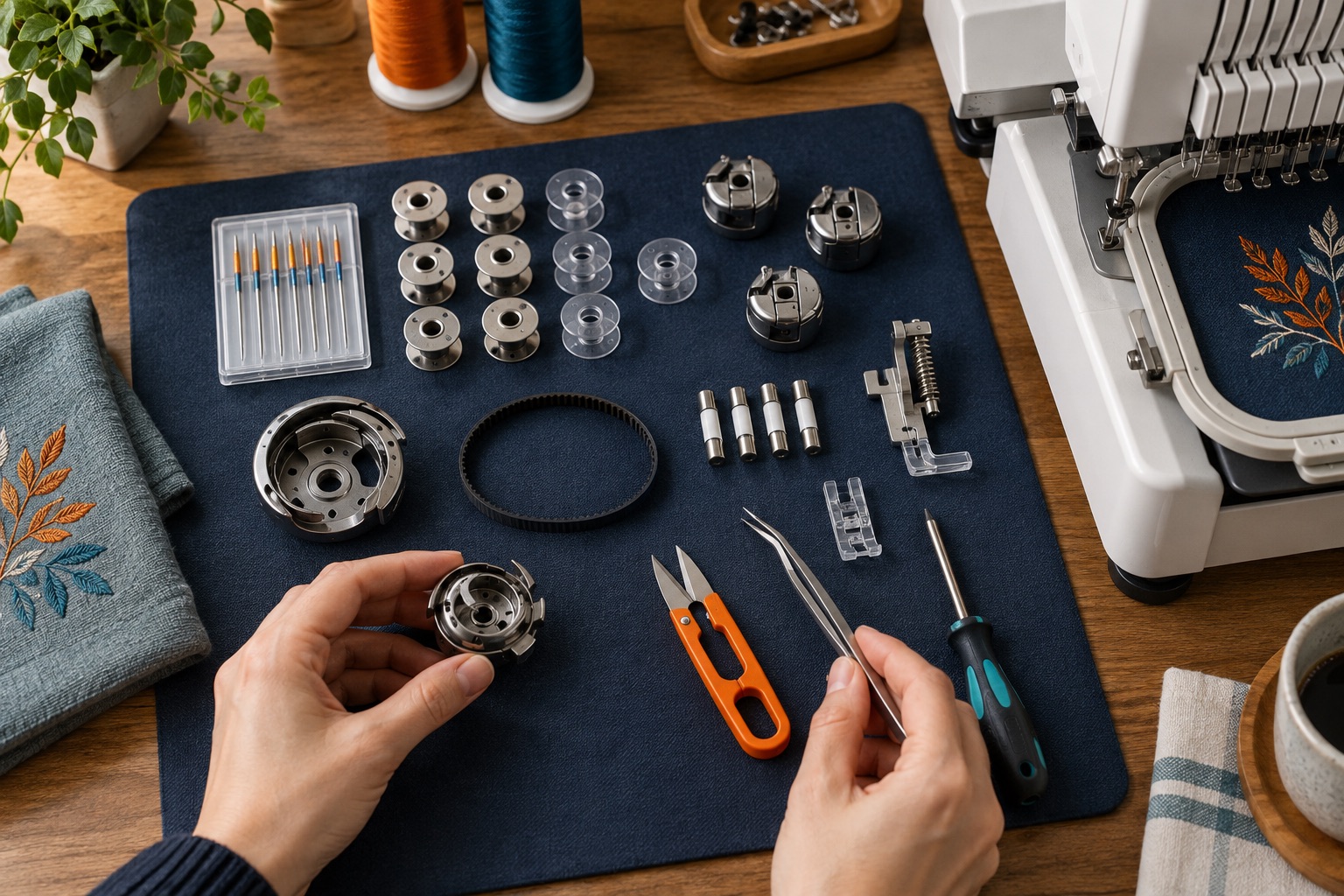
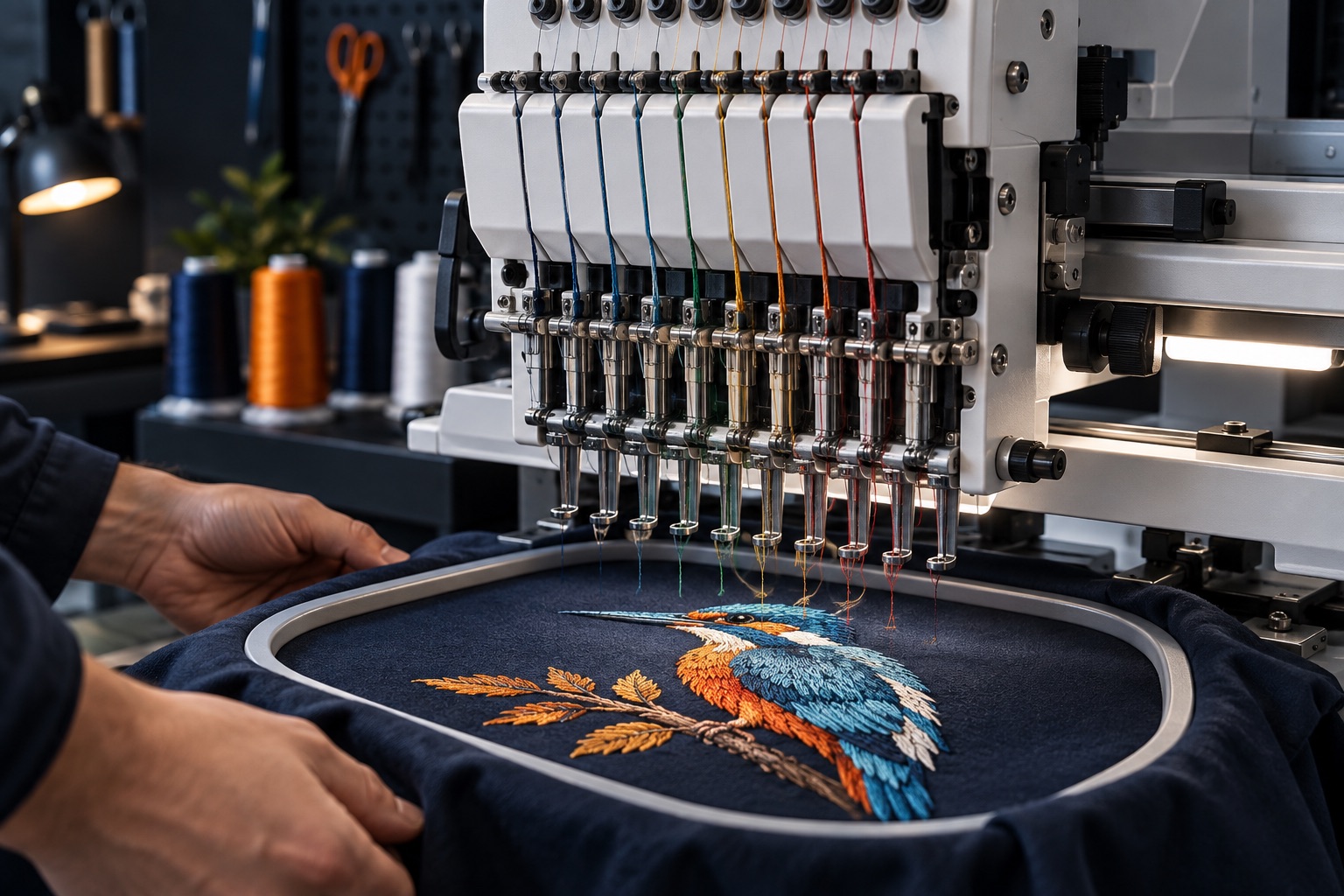
Look for worn needles, rough thread guides, lint around the bobbin area and anything that may catch the upper thread. Replace consumables before they create a larger quality problem.
Check that frames and attachments lock securely and move without interference.
Follow the lubrication schedule
Use only the specified lubricant, quantity and service points. Too much lubricant can contaminate products, while missed maintenance can increase wear.
Keep a simple log with date, operator and completed tasks so maintenance does not depend on memory.
- Clean lint and thread waste
- Inspect needles and thread guides
- Check bobbin area
- Verify frame security
- Lubricate only as specified
- Record issues and maintenance
Stop when something changes
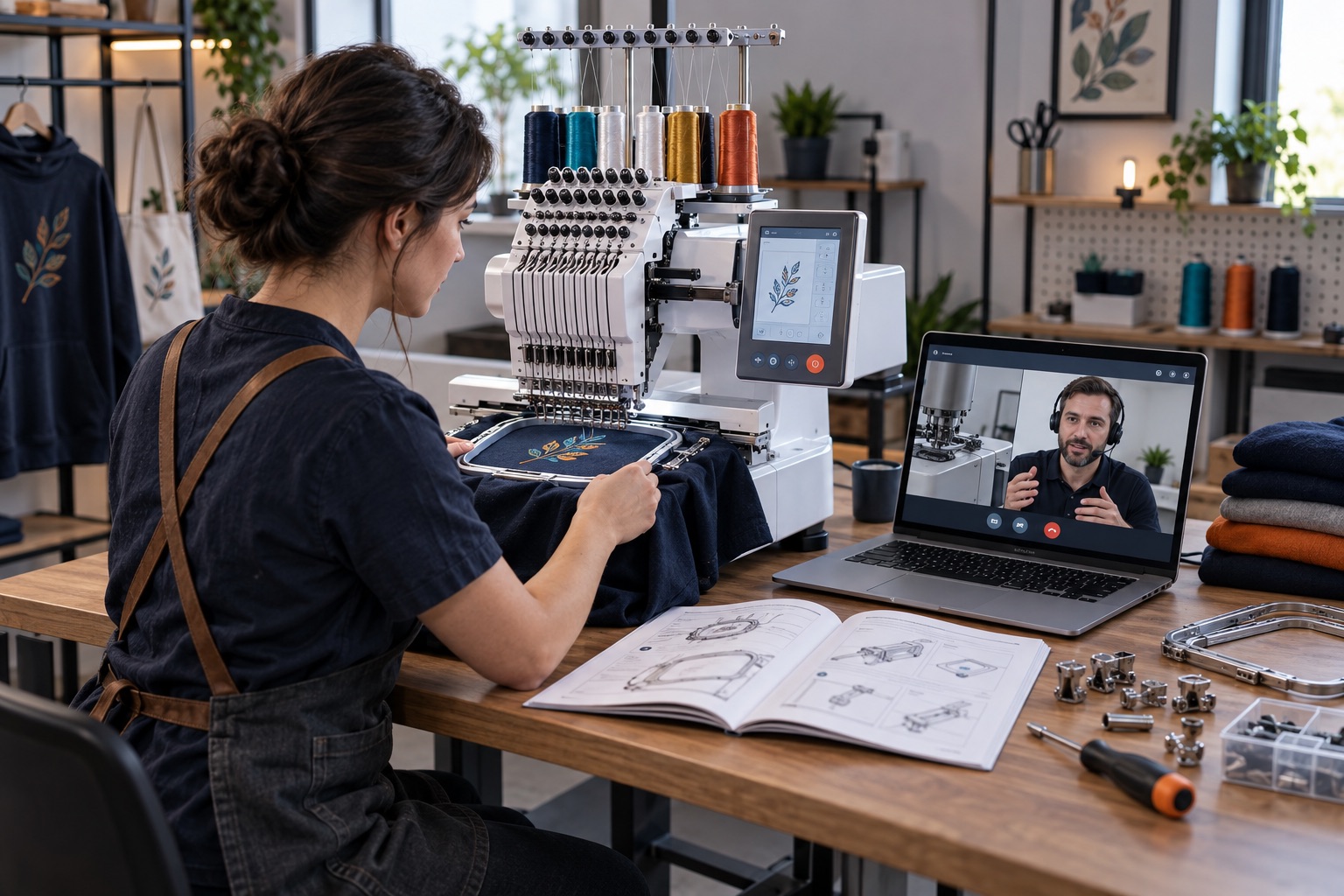
Unusual noise, resistance, repeated needle breaks or a sudden change in stitch quality should be investigated before production continues. Contact technical support when the cause is not clear or service access is required.
Machine configurations, commercial terms and support scope vary. Put the agreed details in your quotation and configuration sheet before ordering.