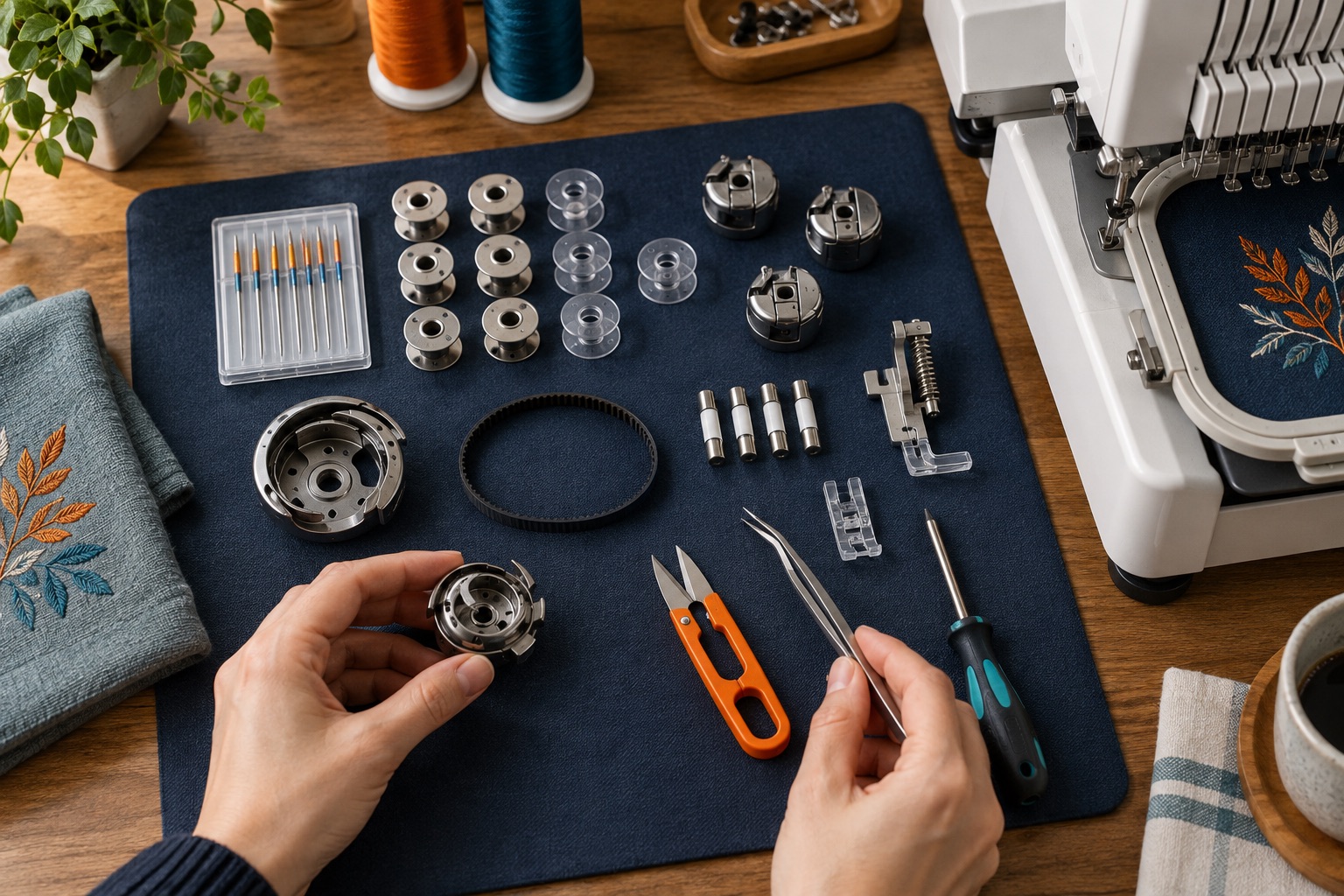
A small spare-parts kit reduces downtime for routine replacements. The best kit is matched to the exact model, needle system and accessories rather than assembled from generic lists alone.
Separate consumables from service parts
Needles, bobbins and commonly worn small items are part of normal operation. Electronic boards, motors and major mechanical assemblies are service parts that may require diagnosis before replacement.
Ask the supplier which items an operator can safely replace and which require technical support.
Build the first operating kit
Discuss suitable needles, bobbin supplies, fuses where applicable, small thread-path parts, tools and the specified lubricant. Include any wear items specific to the cap system or specialty frames you purchase.
Confirm part numbers or clear identification photos so reordering is straightforward.
- Correct needle system and sizes
- Bobbin supplies and bobbin-related wear items
- Approved lubricant
- Basic tools and cleaning items
- Model-specific small wear parts
- Part list with codes or photos
Plan storage and records
Store parts in labeled containers away from dust and moisture. Keep the machine serial number, model, supplier contact and parts list together.
For a two-head machine, hold enough routine consumables to service both heads without stopping paired production.
Review the kit after real use
After several months, update stock levels based on actual replacement frequency and shipping lead time. A small, relevant inventory is more useful than a large box of unidentified parts.
Machine configurations, commercial terms and support scope vary. Put the agreed details in your quotation and configuration sheet before ordering.