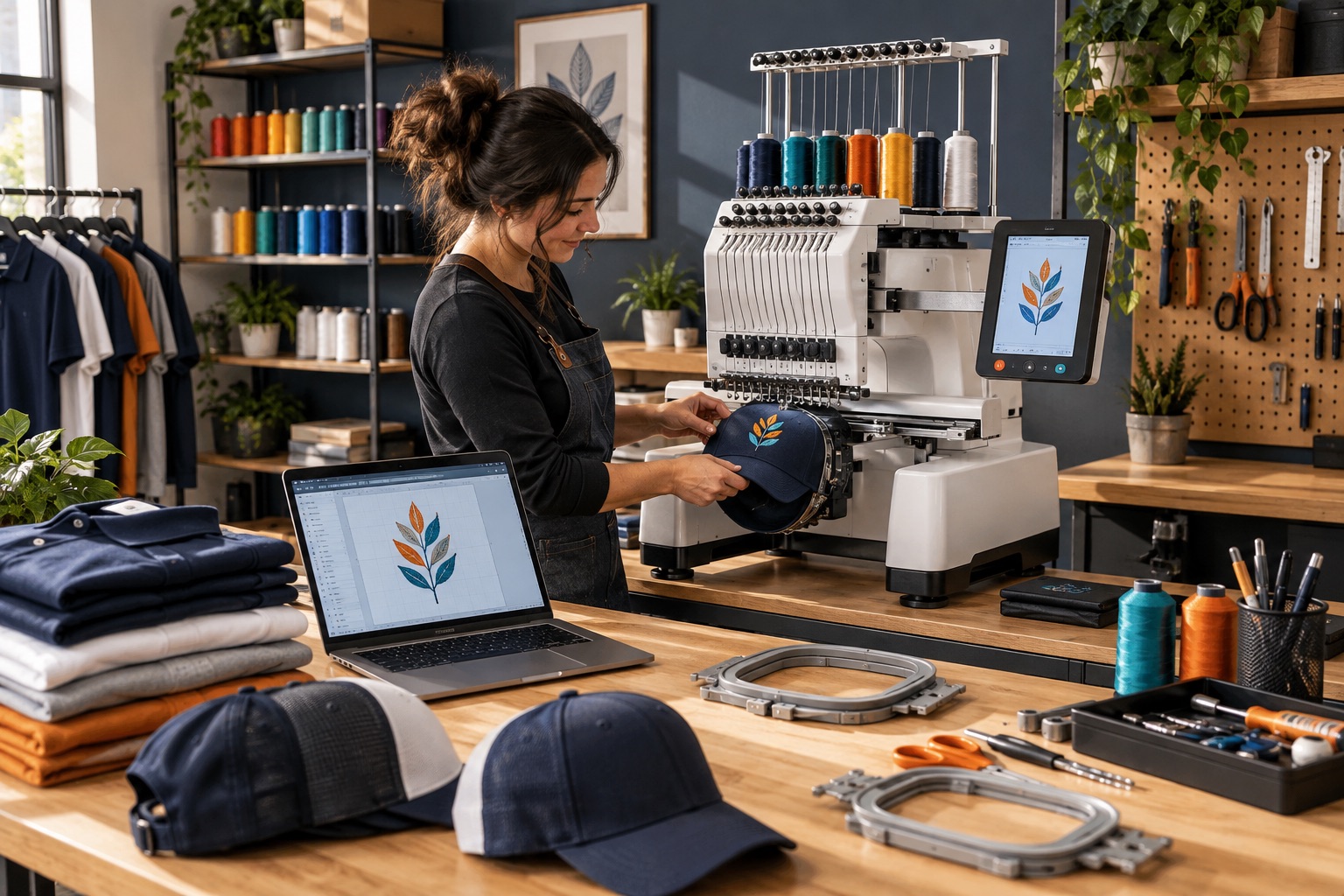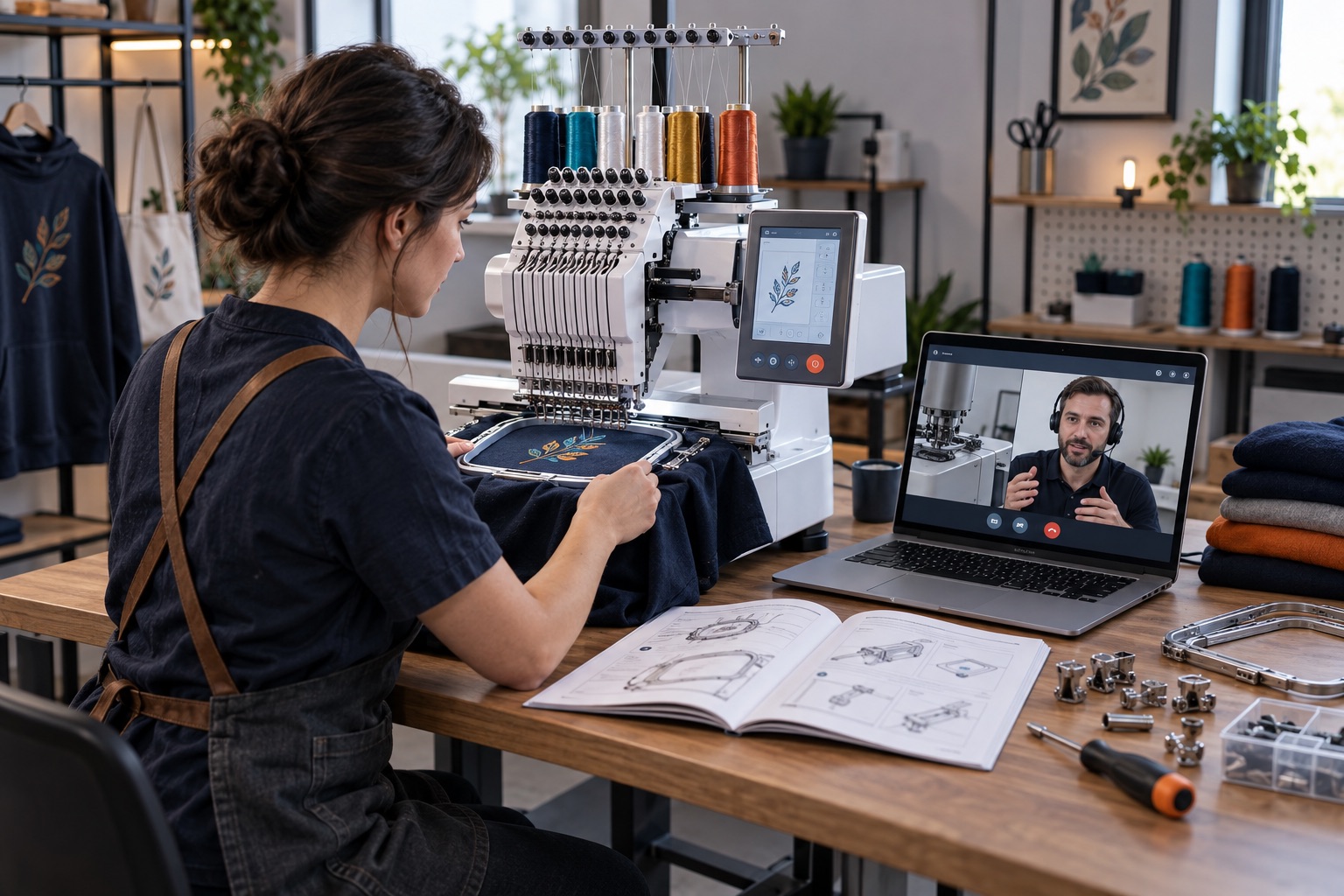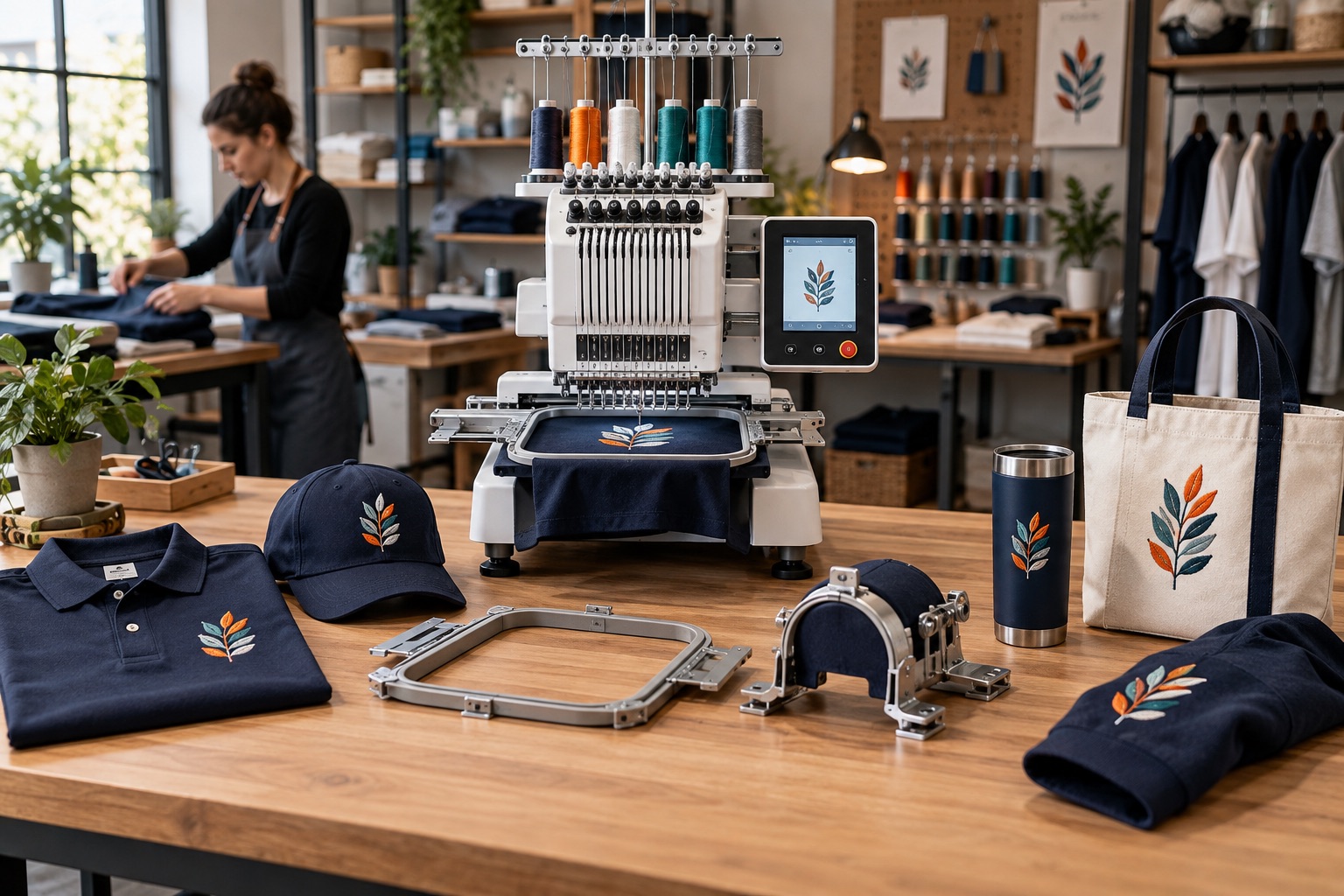
Commercial embroidery machines can work with several product formats, but each format uses a different way to hold and move the item. Understanding the difference helps you order the correct frame package.
Flat embroidery
Flat embroidery is used for fabric panels, patches, unassembled garments and products that can lie open over a frame or table. It is the most direct setup and is useful for large or stable items.
A table may support broad materials during stitching, while smaller hoops control localized designs.
Tubular embroidery
Tubular mode allows a finished garment or closed item to pass around the machine arm. It is useful for shirts, sleeves, bags and other products where only one layer should be embroidered.
The available opening and frame style determine whether a particular item can be positioned safely.
Cap embroidery
Cap embroidery uses a curved frame and driver to rotate the cap front beneath the needle. The cap construction, hooping technique and design preparation all affect the result.
A cap-ready quotation should clearly identify every component in the cap attachment set.
Specify mixed applications clearly
If your shop will produce several formats, list them in order of importance and send photos. The supplier can then recommend the table, frames and attachments needed for a practical changeover between jobs.
- Product photos and embroidery location
- Largest design size
- Flat hoops and table
- Tubular frames
- Complete cap attachment set
Machine configurations, commercial terms and support scope vary. Put the agreed details in your quotation and configuration sheet before ordering.