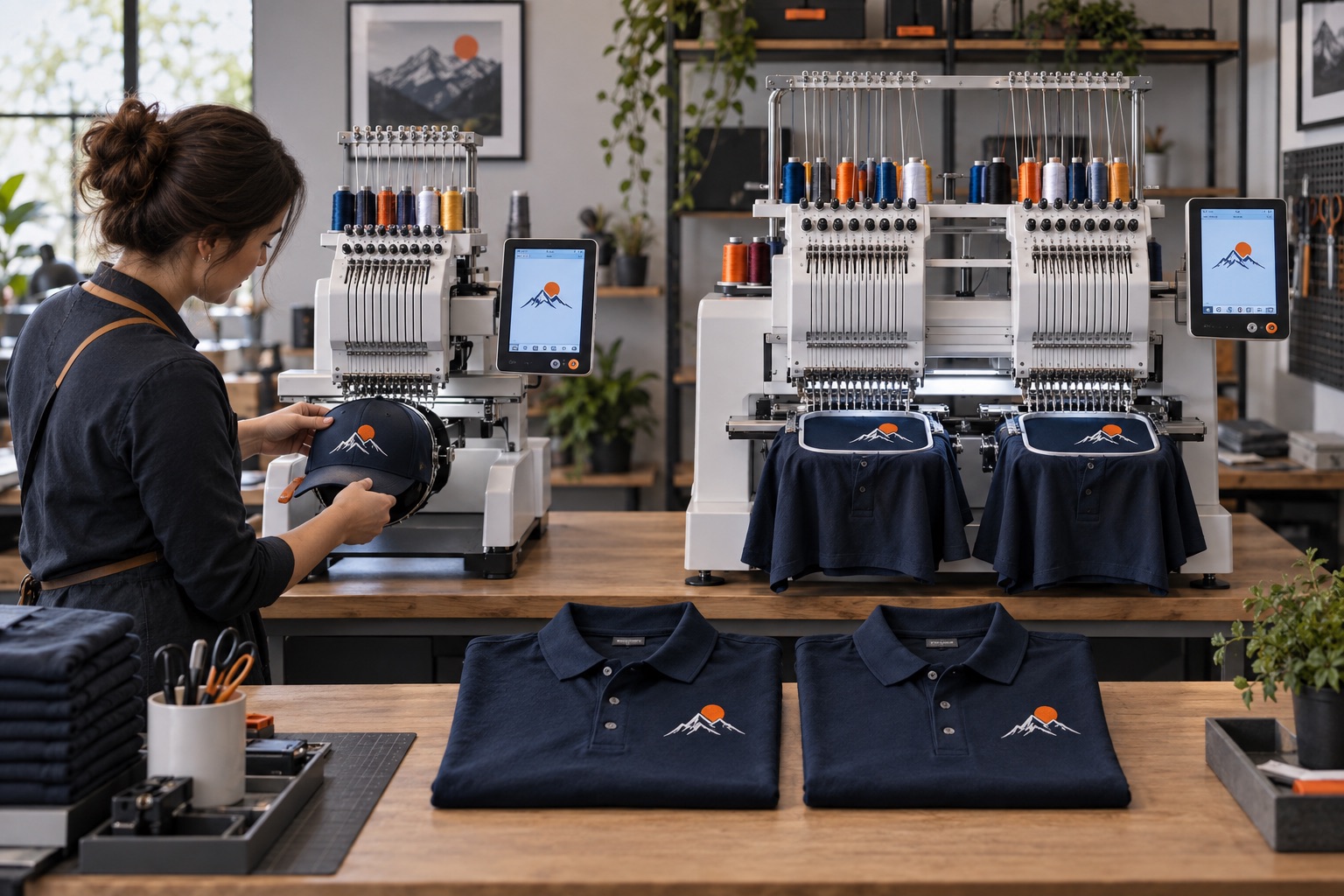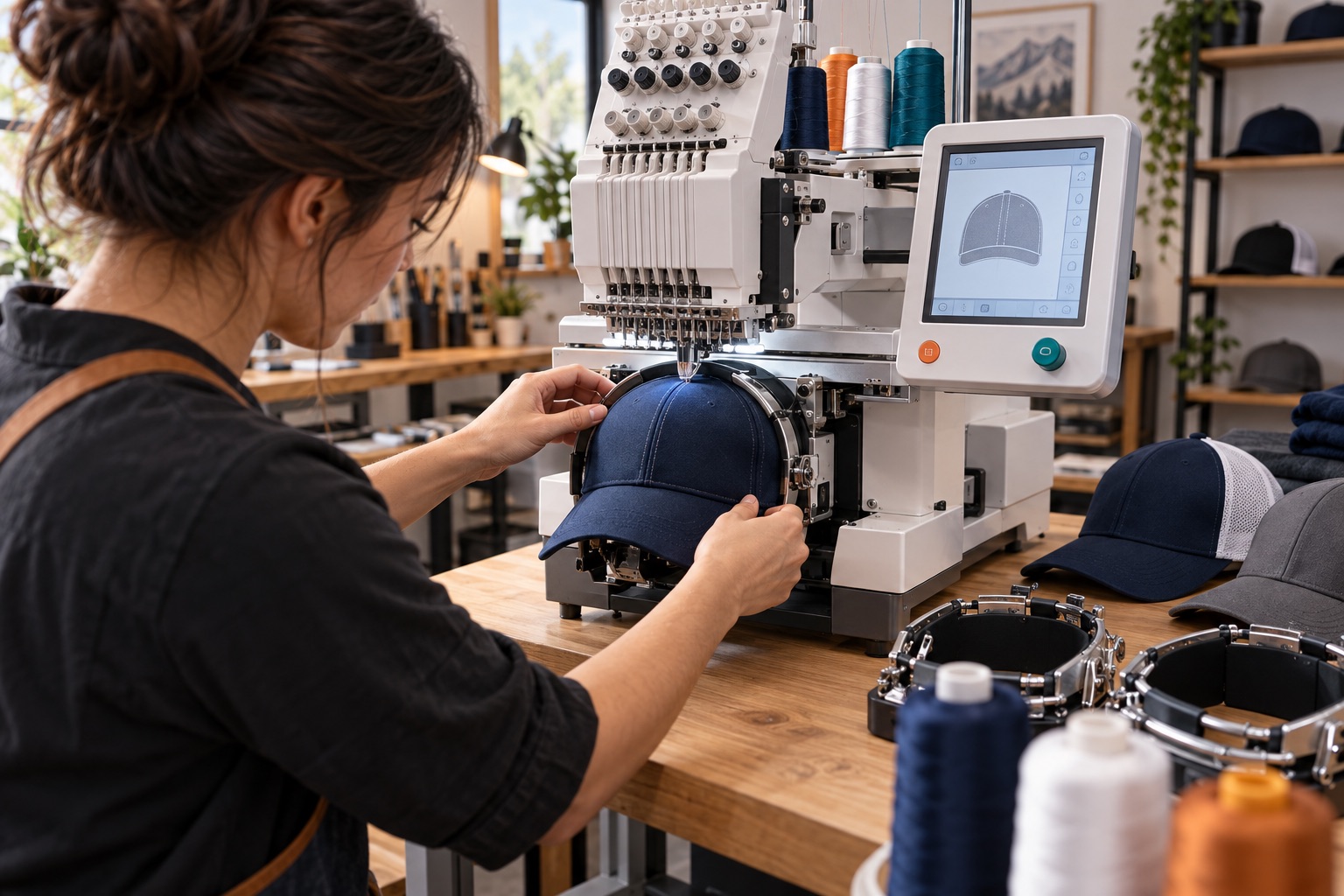
A single-head embroidery machine is often the most flexible entry point for a new shop. It can handle one-off names, samples, mixed designs and short production runs without tying up a larger line. The right purchase, however, depends on much more than the number of heads.
Start with the work you will sell
List the products you expect to embroider during the first year: flat garments, finished caps, patches, bags, shoes or tubular items. Note the largest design size, the materials you commonly use and whether orders are mostly one-offs or repeated batches.
This application list determines the working area, frames, cap system and table configuration. It is a stronger buying brief than asking for the fastest or cheapest machine.
Check the complete configuration
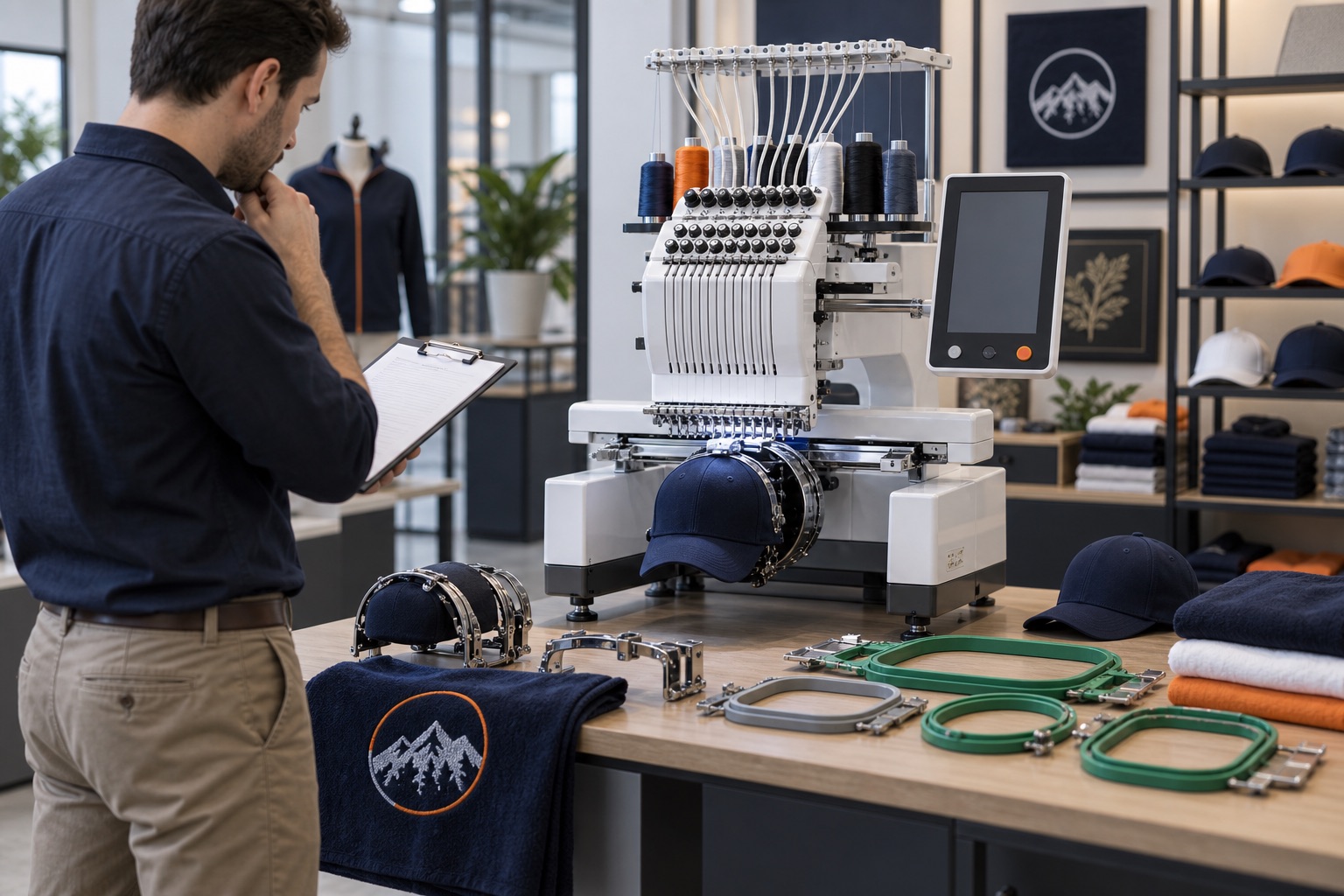
Compare quotations line by line. Confirm the needle count, maximum embroidery field, included hoops, cap frame set, table, stand, control language, voltage and plug. Ask which items shown in product photos are standard and which are optional.
For a first machine, a complete working package is usually more useful than a low base price with essential attachments missing.
- Needle and color capacity
- Largest usable embroidery field
- Hoops and cap attachments included
- Voltage, plug and control language
- Training, spares and warranty scope
Evaluate usability and support
Ask to see the control workflow for importing a design, setting color order, tracing the design boundary and recovering after a thread break. Clear operation matters every day, especially when one person handles both sales and production.
Confirm the support channel before ordering. You should know who answers setup questions, what training material is supplied and how replacement parts are identified and shipped.
Use a sample test before shipment
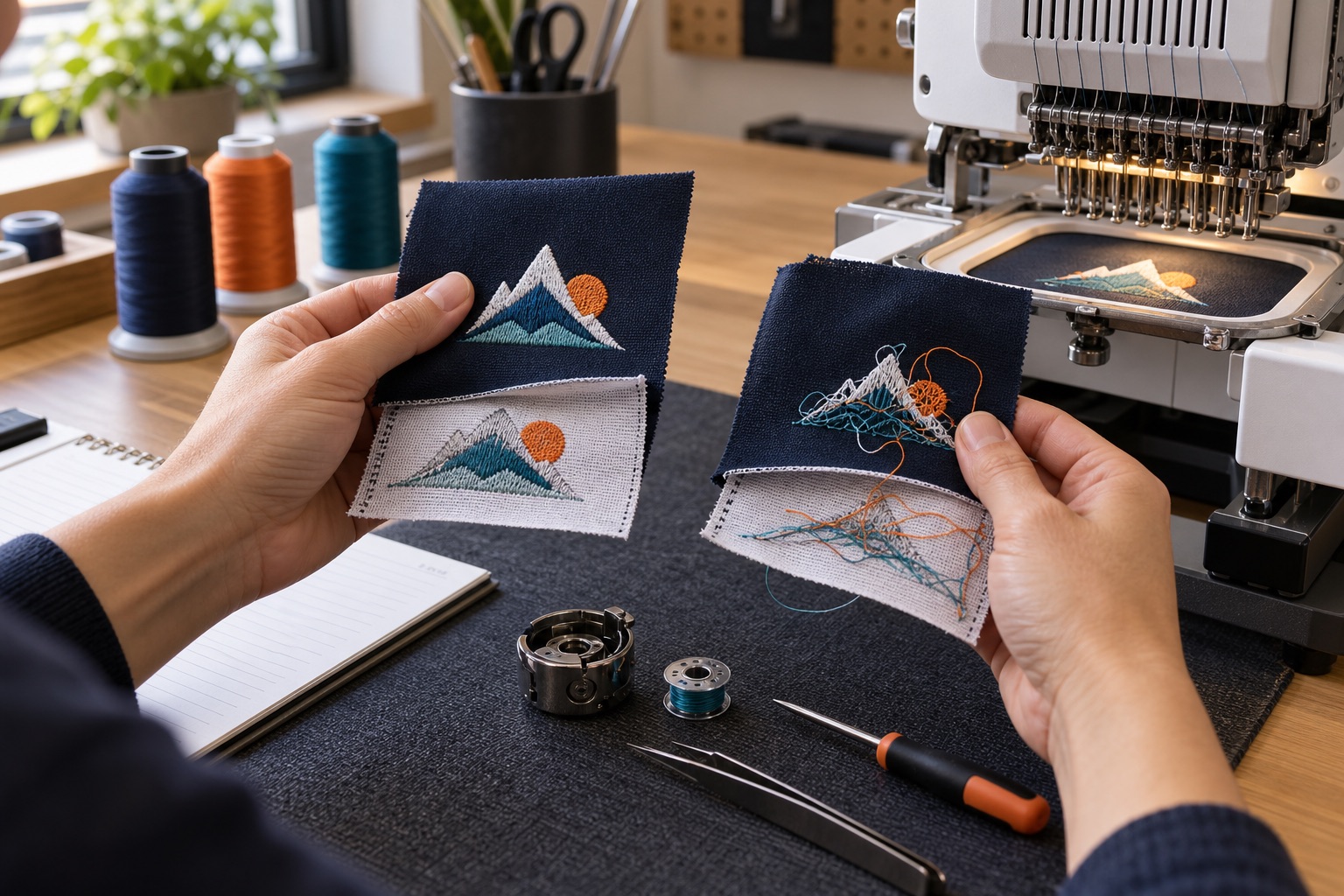
Provide a representative design and material for a pre-shipment stitch test. Review registration, edge quality, small lettering and the reverse side of the embroidery. A test based on your real work is more meaningful than a generic showroom sample.
A well-specified single-head machine gives a small shop room to learn, diversify and build demand before adding more capacity.
Machine configurations, commercial terms and support scope vary. Put the agreed details in your quotation and configuration sheet before ordering.