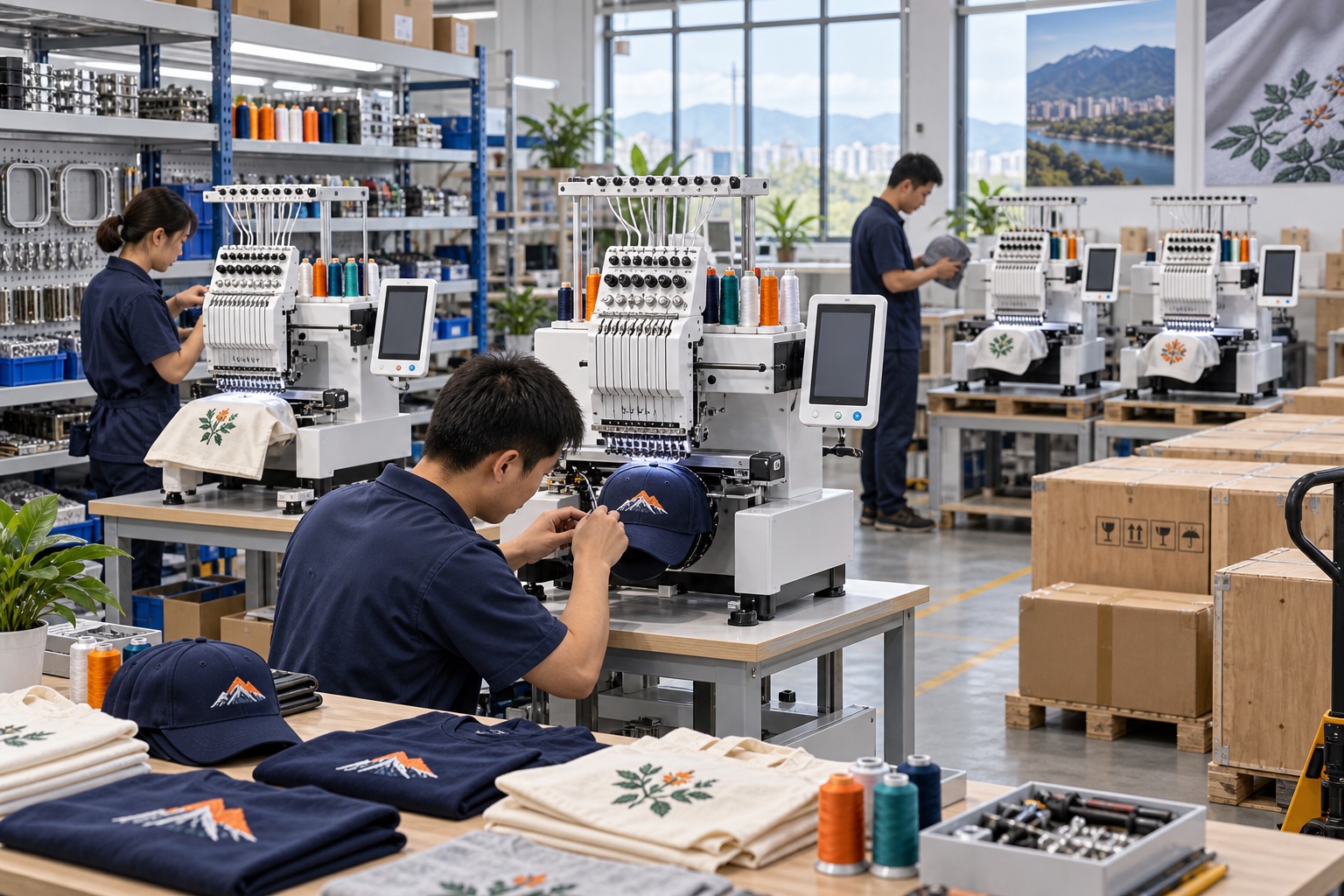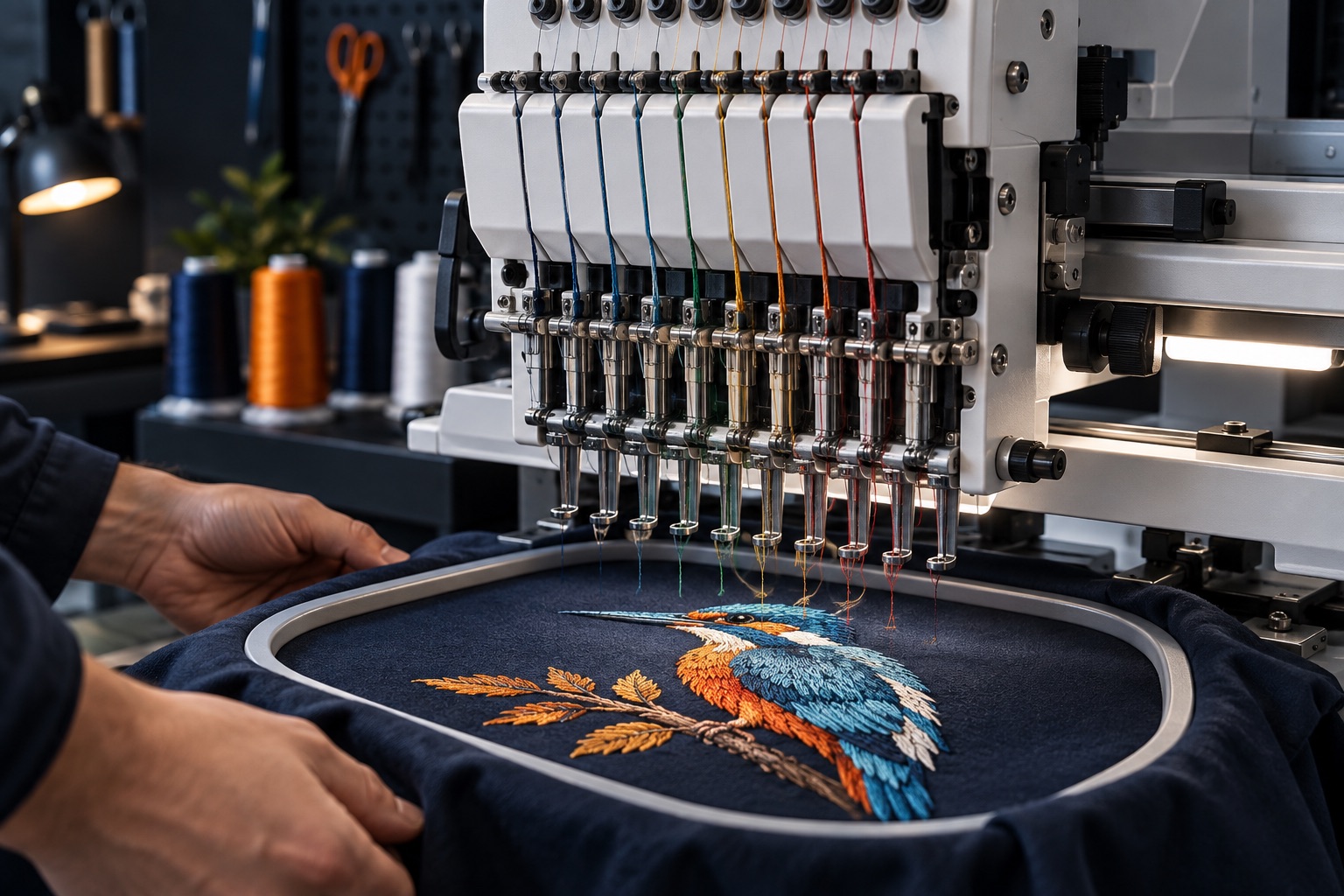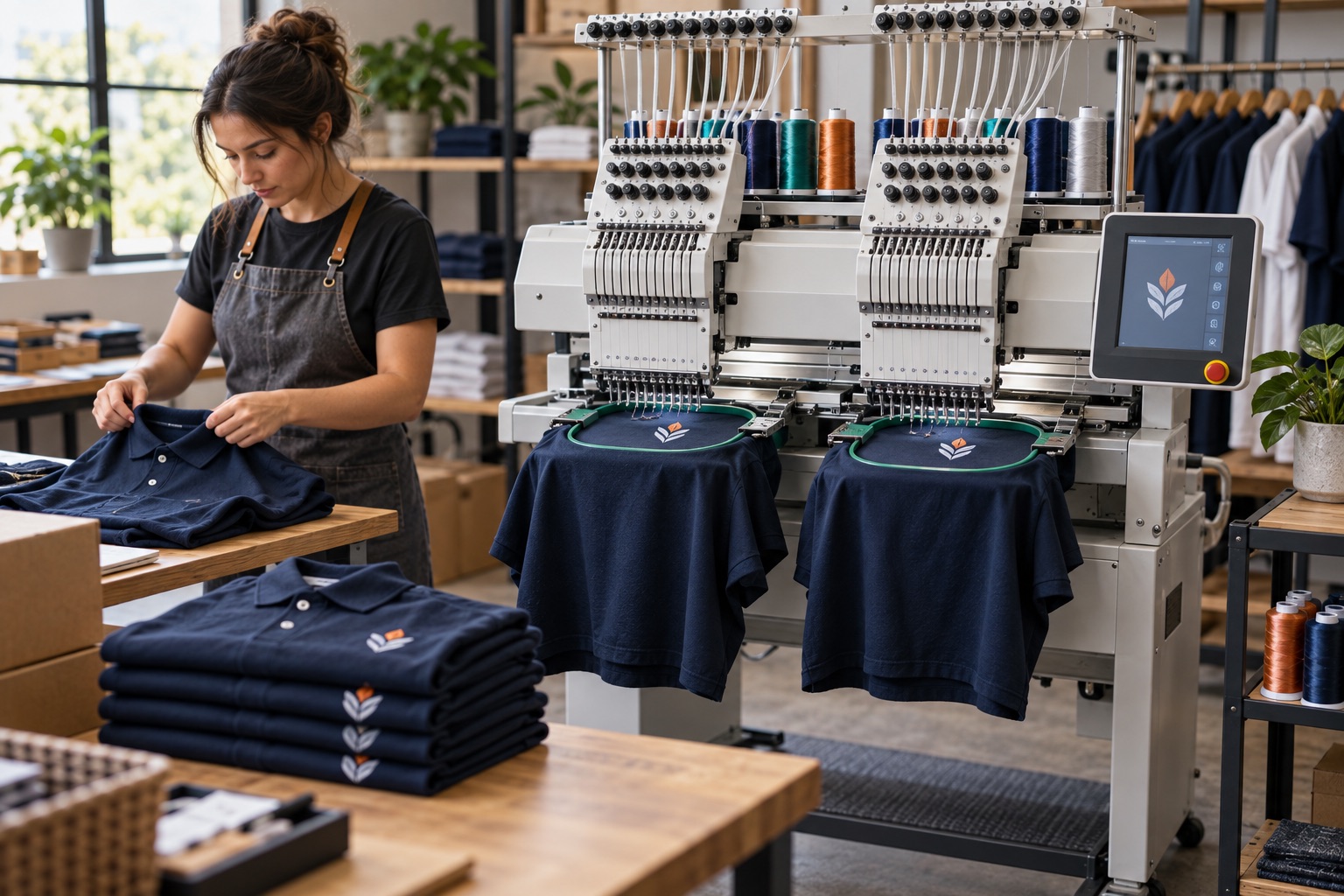
A two-head machine can produce two matching pieces in one cycle, but the investment pays off only when paired work is available often enough. The decision should be based on orders and margin, not head count alone.
Measure repeatable demand
Review recent orders and identify how many could have been loaded in pairs with the same design and colors. Recurring uniforms, teamwear and branded caps are stronger signals than occasional large orders.
Separate true repeat production from personalized items that require different names or files.
Estimate time saved per order
Compare the cycle for two pieces on a single head with one paired run on two heads. Include hooping, loading, design setup, thread changes and inspection rather than calculating from stitching time alone.
The result will vary with design length and how efficiently the operator prepares the next pair.
Calculate contribution, not revenue
Use the additional completed work the machine can realistically accept and the contribution remaining after garments, thread, labor and other variable costs. Compare that monthly contribution with the extra investment and financing cost.
Include attachment, shipping, installation and training costs in the investment figure.
- Monthly paired-order volume
- Cycle time saved
- Realistic machine utilization
- Contribution per finished piece
- Total delivered investment
- Capacity to sell the added output
Choose flexibility or concentration
A two-head machine concentrates production into one paired workflow. Two single-head machines can run different jobs at the same time but may cost more and require more operator coordination. Choose the structure that matches the demand you already see.
Machine configurations, commercial terms and support scope vary. Put the agreed details in your quotation and configuration sheet before ordering.