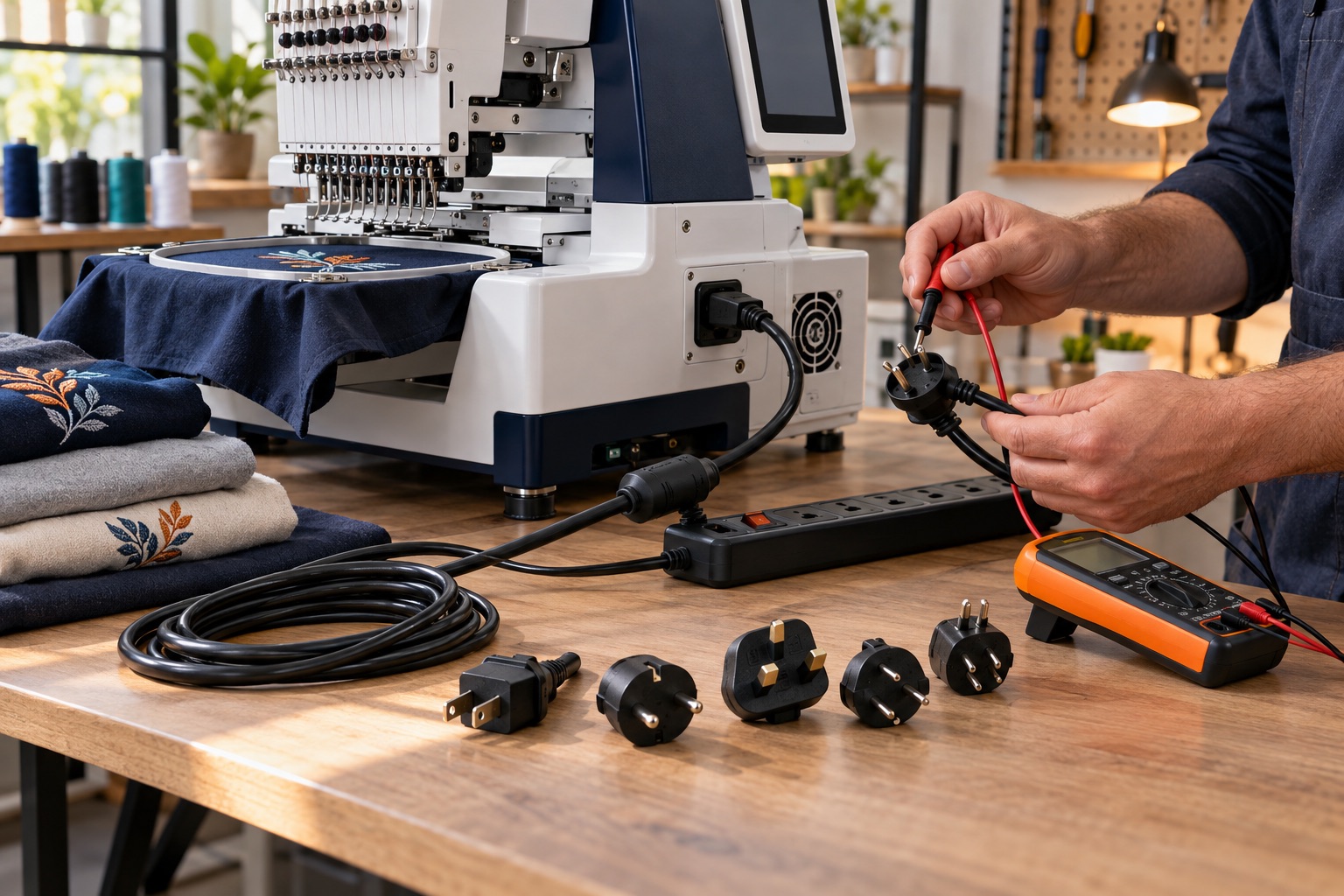
Electrical details must be confirmed for the destination before a machine is built and shipped. A plug adapter alone does not solve every difference in voltage, frequency, grounding or local installation rules.
Send the destination specification
Tell the supplier the country, local supply voltage, frequency and preferred plug type. If the workspace has a dedicated circuit or unusual supply, share those details as well.
Ask the supplier to state the machine input requirement on the configuration sheet and nameplate.
Plan a safe installation point
Use a properly grounded outlet and keep the power path protected from foot traffic, moisture and unstable connections. Local electrical work should be completed by a qualified person who understands the applicable requirements.
Confirm whether the supplier recommends surge protection or another power-conditioning device for the model and local supply.
Check before shipment and arrival
Ask for a photo of the machine label and supplied plug before packing. When the machine arrives, inspect the cable and connectors before applying power, then follow the installation instructions.
Never assume a machine shown in a catalog is automatically configured for every country.
- Country and site voltage
- Power frequency
- Plug and socket type
- Grounding provision
- Machine label confirmation
- Local installation support
Put electrical details in writing
The final order document should state the agreed electrical standard. This gives production, inspection and the buyer one reference point before dispatch.
Machine configurations, commercial terms and support scope vary. Put the agreed details in your quotation and configuration sheet before ordering.